
What does it mean to truly honour queer histories? For archives, museums, and other memory-makers, the answer starts with how we choose to preserve them. Archives, museums, and community collections have a responsibility not just to preserve LGBTQ+ stories, but to do so in ways that are ethical, inclusive, and rooted in care. t’s important for heritage professionals to reflect on how we engage with LGBTQ+ records, communities, and histories.
Queer Histories, Radical Futures is a free toolkit created to support archivists, heritage professionals, and community memory-makers who are working to make their practices more inclusive and community-focused. It offers practical strategies for protecting, honouring, and uplifting queer histories—now and into the future.
Why this matters
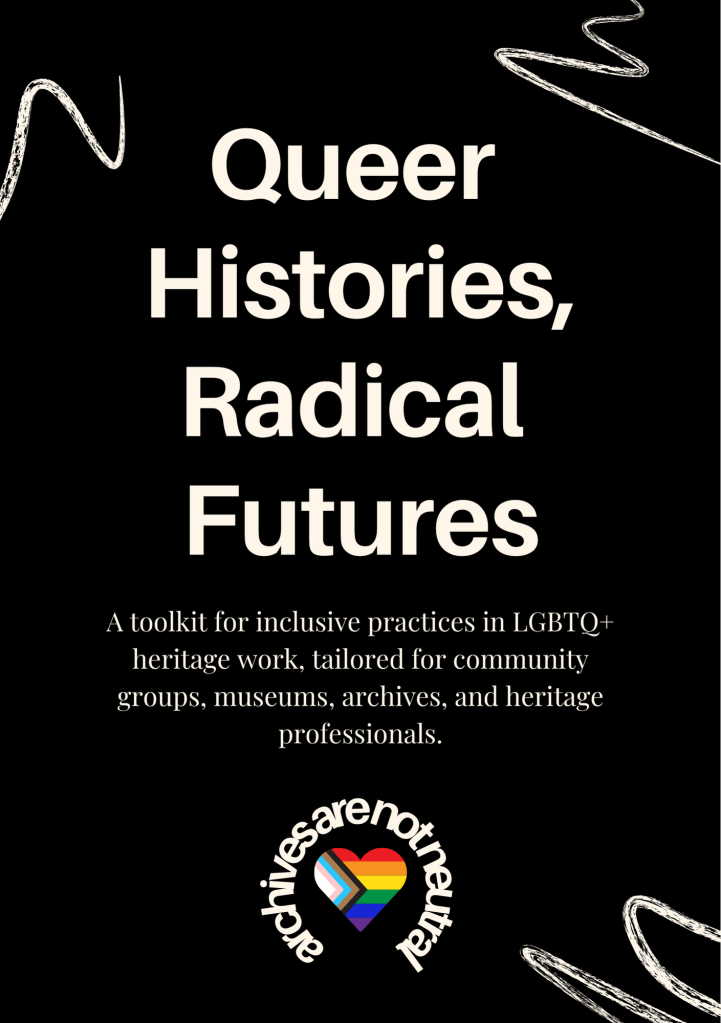
LGBTQ+ histories have too often been marginalised, misrepresented, or excluded from mainstream archival work. Grassroots and community efforts to preserve queer memory are important, and they too deserve tools that support ethical, thoughtful, and inclusive practice.
This toolkit helps bridge that gap. It’s designed for both institutional and community contexts, offering guidance that is adaptable, accessible, and grounded in lived experience.
What’s inside the toolkit
- Guidance on handling personal and sensitive data with an emphasis on care, consent, and dignity.
- Reflections on the importance of queer history and community memory, especially in the face of ongoing cultural and political erasure.
- Practical advice for heritage professionals and individuals considering how to archive or donate personal or community records.
- Strategies for collaboration between institutions and LGBTQ+ communities.
Who it’s for
This resource is intended for:
- Archivists, curators, and professionals working in heritage organisations
- Community-led archives and grassroots preservation projects
- LGBTQ+ individuals, families, and groups considering how to document and share their histories
Developed from lived practice
This toolkit is informed by years of experience working in the heritage field and consulting on inclusive archival practices. It reflects both professional knowledge and direct engagement with queer communities and their histories.
Access the toolkit
The Queer Histories, Radical Futures toolkit is available now through the Bi History project. It’s free to download, with no sign-up required.
 Bi History