
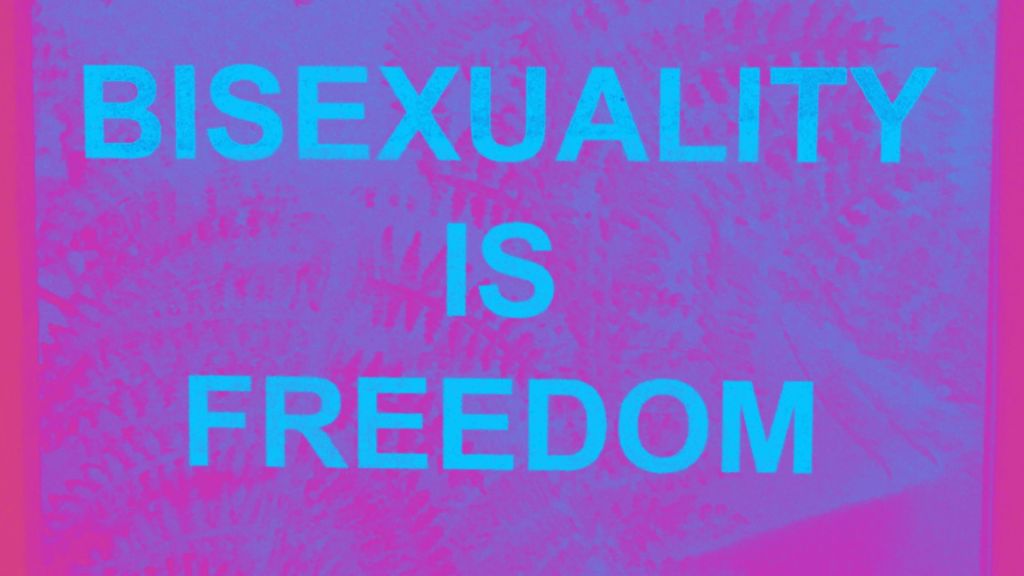
“Bisexuality means I am free and I am as likely to want to love a woman as I am likely to love a man, and what about that?
Isn’t that what freedom implies?”
– June Jordan
Understanding who we are is an ongoing journey that begins the first moment we look down at our hands and think about how they interact with the world around us, even if that’s just reaching for a toy or food.
As we grow older, the people around us tell us things about ourselves. If you make the mistake of proclaiming a love for cats or horses at an early age, you can expect gifts from well meaning family members or friends with the appropriate animal pattern, for pretty much the rest of your lives. ‘But you love cats/horses/[insert animal]’ they proclaim, and while that was perhaps true one Tuesday morning in June, you find yourself wondering if it is meant to define you forever.
Self-discovery is perhaps most socially accepted as a process (although not necessarily respected) in our teenage years, whether that’s cliches about listening to loud music and pouring our hearts out online or disappearing into reading and learning and hopes for the future. We permit ourselves this journey of self-creation, the space to make mistakes and become something for a while – but the more time passes, the more we are expected to have a fixed understanding of who we are and what that means.
I’m now in my late 20s, and I find people asking me ‘what do you do’ when I first meet them, as if it’s a cheat-code route to understanding who I am. I’m just as guilty of it, trying to place someone when I first meet them to make sense of where they fit into the world, and what that means about who they might be. We, as a society, like to use language to make labels and identifiers for all kinds of aspects of identity. We divide ourselves into categories and cliques, often based on the things we make, do, or enjoy. Offering our most beloved objects of consumption, or chosen words to define ourselves, we ask do you see me now?
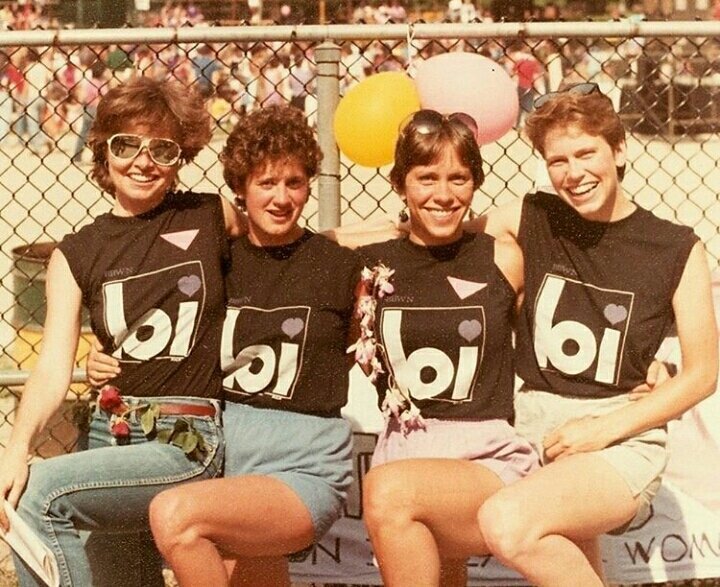
I have a t-shirt that I bought about four years ago from Autostraddle, it’s a recreation of a shirt worn by Boston Bisexual Women’s Network at the Christopher Street Liberation Day, New York City in1983, and it proclaims on the front in a gorgeous vintage looking logo ‘bi’.
Yet, the identifier ‘bisexual’ has not always felt comfortable for me, as something I can wear on my chest with pride. It’s been a journey to get to that point, one of self-discovery that began as a young person knowing there was something just a little different about me compared to my peers, and I’ve continued to grow and change as I’ve aged. I expect that journey of self-discovery and exploration to continue for the rest of my life, in fact, I hope it does. I expect I will be describing myself as bisexual for the rest of my life too, but it’s a part of the whole of me.
The word itself feels comfortable now, and I wear the ‘bi’ t-shirt without a rush of anxiety about what it means to apply a label to myself and whether I am deserving of it, if I am enough for it. I didn’t always feel that way, and I am grateful to feel this pride in who I am, as a bisexual person and member of the queer community.
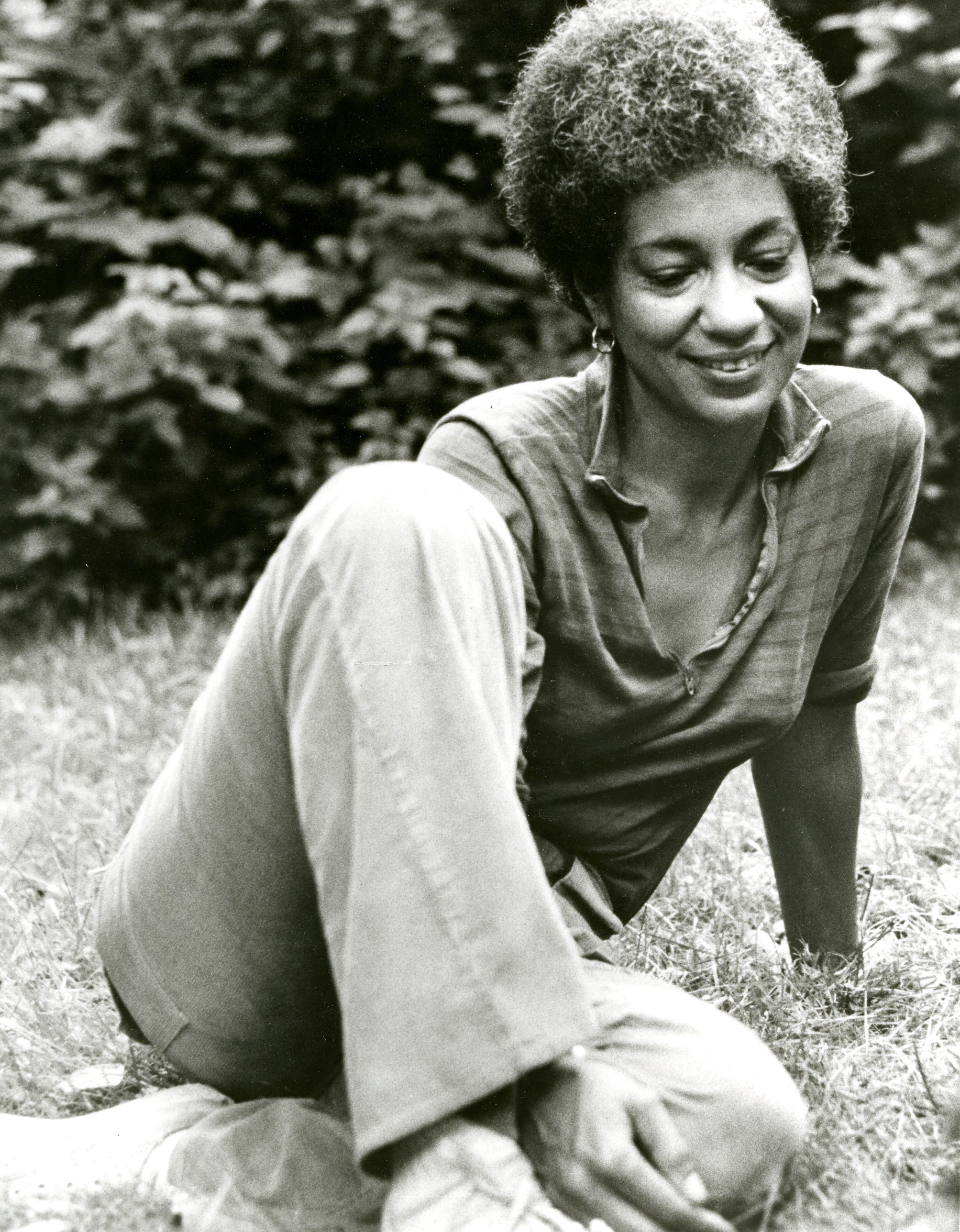
June Jordan – poet, writer, activist
The quote at the top of this post is from June Jordan, a Caribbean-American poet, writer, bisexual and civil rights activist, and teacher. The first time I read her words on bisexuality, was also the first time I’d seen someone describing bisexuality as something joyous, exciting, and to be celebrated. It encouraged me to looked at my identity as something to be proud of, and in that moment, that felt new. It also showed me that I had a right to consider myself a part of the movement for LGBTQ+ rights, as a member of that community.
As a bisexual person I spend a lot of time and energy thinking about and analysing and debating and considering my identity, what I’m allowed to do and say, how much I’m allowed to claim my community’s heritage. Reading this quote, I came to understand that I was lucky to be bisexual. I was grateful for this part of myself, and happy to be part of this community with a long heritage of activism, compassion, and political change.
Bisexuality had always felt like a question I was constantly asking with no clear answer. Am I this? Or am I that? So many things in our lives are one or the other, and it felt impossible to fit the existence of all the potential of my bisexuality into my head. But here June was, someone who lived and died before I was even old enough to use the word ‘bisexual’ to define my identity, describing the radical political potential of bisexuality, and the joy and freedom inherent in our identity.
Now, I feel fortunate that my identity as a bisexual person has encouraged me to engage critically with the world around me and my own conception of myself. As June says, bisexuality is politicizing, it is freedom, it is not being predictable, it is not controllable.
That’s why I say, ‘bisexuality is freedom’. It’s my own take on those words of June Jordan’s, a summation of the message she shared that spoke to me so deeply, all those years after she put it into words. Bisexuality is never quite just one thing or the other, and it is also something all of its own. It is a challenge, to the binary understanding of the world around us, and at times to people within the wider queer community, and without. Bisexuality frees me from the restrictions the world encourages me to place on myself, it allows me to create myself as I wish to be, outside the norms of our world. It encourages me to see community with other queer people, and to take seriously the responsibility I have to educate myself and fight for other marginalised people whenever I can.
Bisexuality is freedom, it is a political, powerful community of people that care for each other and for the liberation of LGBTQ+ people. It isn’t always, of course, but it can be, and to me, that’s freedom.
What is freedom?
June wrote a lot about what freedom meant, and it would be remiss of me not to acknowledge the complex history of that word for a Black woman in America, but to understand what she was expressing when wrote ‘bisexuality means I am free’, we can look to more of her writings. In the same essay the opening quote is taken from, June wrote,
“If you can finally go to the bathroom wherever you find one, if you can finally order a cup of coffee and drink it wherever coffee is available, but you cannot follow your heart – you cannot respect the response of your own honest body in the world – then how much of what kind of freedom does any one of us possess?”[i]
For her then, in this context, freedom is about having access to meet your needs (using the toilet, drinking coffee), the ability to follow your heart, to know your true feelings and be able to act on them. In the essay she also wrote,
“Freedom is indivisible or it is nothing at all besides sloganeering and temporary, short-sighted, and short-lived advancement for a few. Freedom is indivisible, and either we are working for freedom, or you are working for the sake of your self-interests and I am working for mine.” [i]
When she wrote this, June was referring to her belief that the causes of anti-racism and LGBTQ+ rights cannot be separated. But it means too, that freedom is about community, about supporting and uplifting those around you in their fight, as well as your own. For her, identity was about being part of a cause for a better, fairer world.
“Even as I despair of identity politics -because identity is given and principles of justice/equality/freedom cut across given gender and given racial definitions of being, and because I will call you my brother, I will call you my sister, on the basis of what you do for justice, what you do for equality, what you do for freedom and not on the basis of you who are, even so I look with admiration and respect upon the new, bisexual politics of sexuality.” [i]
June Jordan died tragically young of breast cancer, at just 65. Still, she leaves us with an incredible body of work, 27 books – seven of which are collections of political essays. It’s easy to take beautiful quotes from June’s work, because of her talent as a writer her content is easily applied more broadly, but the context of her writing matters. She was a proud, tireless activist, dedicated to issues of race, gender, immigration, and queerness, which she felt were inextricably linked.
She wrote often using Black English, committed to its role as an outlet for Black culture and a language in its own right. Her writing continues to move, challenge, and educate me, and to inspire me as a member of the bisexual+ community. In a 1998 interview, June Jordan said,
“Poetry is a political act because it involves telling the truth. In the process of telling the truth about what you feel or what you see, each of us has to get in touch with himself or herself in a really deep, serious way. Our culture does not encourage us to undertake that attunement. Consequently, most of us really exist at the mercy of other people’s formulations of what’s important.”[iv]
Bisexuality is freedom
I am so grateful to June for teaching me that bisexuality is a form of freedom, and that it is up to me to decide what matters most, what is important, and how to find the truth. She writes of political solidarity, of the cause of all marginalised people being intertwined, and how we must fight together to make the world better for each other. She reminds me to look to myself for what I think the truth is, to fight for my community and what matters.
Bisexuality is freedom.
-Written by Mel Reeve for the Bi History blog
[i] https://rachelyon1.files.wordpress.com/2015/01/a-new-politics-of-sexuality.pdf
 Bi History
One response to “What does it mean to say ‘bisexuality is freedom’?”
[…] Read more about bisexuality is freedom and June Jordan […]